Take a look at our current subscription offers.
Gabriel Fauré
1845 - 1924
Fauré triumphantly disproved the notion that musical expression could no longer move forward using the familiar series of major and minor keys - tonality.
Life and Music
- Fauré had an amazing ‘inner ear’ that enabled him to compose away from the piano.
- It would appear that Fauré’s exceptional gift for music was obvious to everyone except his primary-school, inspector father, Toussaint-Honore.
- Composer-teacher Louis Niedermeyer was so impressed by the nine-year old Fauré was belatedly enrolled (free!) at the Ecole de Musique Classique et Religieuse (later Ecole Niedermeyer), Paris. He stayed there for 11 years, developing an enviably fluent piano technique.
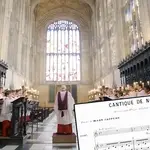
- Among the budding young composer’s earliest published works are the delightful solo piano work of 1863, Chants sans paroles (Songs Without Words), and the Cantique de Jean Racine, a ravishing choral miniature from 1865.
- In 1883, Fauré married Marie Fremiet, daughter of the renowned sculptor, Emmanuel. It was a conventional rather than loving relationship. By the century’s end their marriage was conducted largely through letters rather than physical intimacy.
- In 1888, after almost 20 year’s labour, Fauré’s Requiem, an adiant masterwork affirming the composer’s unshakeable belief in the afterlife, received its first performance.
- In 1892, Fauré was appointed Inspector of Music in Paris. By then he had begun an affair with Emma Bardac (who later became Debussy’s wife), an effervescent, musically cultured woman who gave birth to a daughter, Helene in June of that year.
- In 1896 he was appointed chief organist of the Madeleine and, succeeding Massenet, professor of composition at the Paris Conservatoire. During his 25 years there, he taught an extraordinary array of talented pupils including Ravel, Cortot, Enescu, Roger-Ducasse (reportedly his favourite) and Nadia Boulanger.
- At the turn of this century that Fauré met 24-year old Marguerite Hasselmans, a highly intelligent and gifted pianist. She was to remain his mistress and constant companion to the end of his days.
- In 1909 he was elected to the Adademie des Beaux-Arts, the following year became Commander of the Legion d’honneur, and a decade later, was awarded the Grand Croix. His music, meanwhile reached new peaks of perfection with his powerful operatic masterpiece, Penelope.
- Behind the public success lay the private tragedy of Fauré’s increasing deafness and the onset of disturbing aural hallucinations. Detected as early as 1902, he kept the problem from even his closest friends until, in 1920, he was finally forced to resign from the Conservatoire.
- In the four last years of his life, Fauré continued to compose music of rare beauty, including the D minor Piano Trio, the song cycle L’horizon chimerique (The Fanciful Horizon) and the String Quartet of 1924.
- Fauré died in 1924 from pneumonia.
Did you know?
It wasn't until he was 50 years old that Fauré’s exceptional talents began to be recognised.