Take a look at our current subscription offers.
William Walton
1902 – 1983
William Walton was the finest English composer of his generation.
Life and Music
- His highly distinctive voice, which emerged in the period between Ralph Vaughan Williams and the arrival of Benjamin Britten and Michael Tippett, would have thrived extremely well in a previous musical generation - the mid-1800s perhaps.
- In 1921, very early in his career, Walton composed his most individual and contemporary-sounding score, Facade. This ground-breaking work aroused critical expectations.
- Walton's musical instincts steered him in a much more traditional direction, towards the revitalisation of the concerto, symphony and oratorio - genres that appeared, falsely, to be breathing their last.
- Unlike many musical greats, Walton's early childhood in Lancashire was not a long series of prodigy star turns - his piano and violin lessons met with only average success.
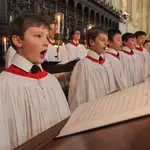
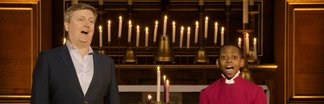
- His exceptional voice earned him a place at the Christ Church Cathedral Choir School in Oxford when he was just 10, and within two years he was composing - mostly choral works, songs and organ music.
- At 16 he entered Oxford and looked set for an academic career, but four years later he left without his BA, having lost interest in the course and failed to pass the matriculation examination.
- After writing a String Quartet when he was 17 - which he later dismissed as "mostly undigested Bartok and Schoenberg" - came Facade (1921-2), which established the composer's name once and for all, though Noel Coward was said to have left halfway through the premiere in a state of considerable agitation.
- The first work to fully proclaim Walton's genius was the Viola Concerto (1928-29), a work that formed the emotional core of Walton's output for the next half-century.
- The Thirties opened spectacularly for Walton, with Belshazzar's Feast (1930-31) which was immediately hailed the most important English choral piece since Elgar's Dream of Gerontius 30 years earlier.
- The great Russian-American violinist Jascha Heifetz asked Walton to write a violin concerto for him, and the result is one of the finest concertos ever composed for the instrument.
- Throughout the Second World War, during which he served in the Ambulance Corps, Walton concentrated on less demanding, suite-like genres including movie soundtracks (Major Barbara, Hamlet and Henry V) and ballet scores (The Wise Virgins and The Quest).
- In 1948, the composer visited South America as a representative of the Performing Rights Society, and met Susana Gil, an attractive and vivacious Argentinian.
- Walton produced a steady stream of masterly scores over the next 20 years - the Cello Concerto (1956), Second Symphony (1959-60), Variations on a Theme of Hindemith (1962-63), his second opera The Bear (1965-67), and Improvisations on an Impromptu of Benjamin Britten (1969).
- Walton married Susana Gil in December of 1948, and moved to the island of Ischia in the Bay of Naples, where they lived, according to Lady Walton, 'an almost monastic existence' to the end of Walton's life, The first major work from Ischia was the ravishing grand opera Troilus and Cressida (1950-54).
Did you know?
William Walton also wrote music for royal occasions, including Crown Imperial for the coronation of King George V and Orb and Sceptre for the coronation of Queen Elizabeth II.